For SEO or GEO to translate into measurable B2B pipeline and revenue, the target can’t just be organic blue link rankings or AI citations. The central revenue-driving objective is controlling the search results page in all the areas where buyers are looking.
Over the past few years, the structure of Google’s results pages has changed dramatically. What used to be a list of ten blue links has evolved into a layered environment of AI Overviews, ads, videos, third-party platforms, comparison modules, and knowledge panels. Buyers rarely interact with just one result anymore. Instead, they scan the page, compare options, and validate what they’re seeing across multiple placements before deciding who to contact.
That shift fundamentally changes how SEO should be approached. If your strategy is focused solely on achieving a single organic ranking, you’re competing for only one slice of attention in a much larger ecosystem. The companies that consistently win high-intent B2B search are doing something different; they’re present everywhere buyers look on the results page.
The phrase I like to use to describe this outcome is:
Omni-SERP
P.S. SERP stands for “Search Engine Results Page.”
Omni-SERP refers to the situation where a company appears across multiple high-visibility elements of the same Google results page for a commercial query.
When this happens, two things become immediately noticeable.
- First, the company dominates the visual landscape of the query.
- Second, competitors struggle to gain meaningful exposure because so much of the available attention is already captured.
This kind of presence doesn’t happen accidentally. It’s typically the result of several SEO and distribution levers working together…organic search, paid search, video, third-party platforms, and brand authority reinforcing each other. When those elements align, a company can effectively control the narrative around a category-defining query.
And when that happens, pipeline follows.
The Types of Queries Where Omni-SERP Matters
Omni-SERP becomes most valuable when applied to high-intent commercial searches, particularly those that signal vendor evaluation. These are the moments when buyers are actively researching solutions and beginning to form a shortlist.
In B2B, these queries often take forms such as:
- “best [solution] for [use case]”
- “top [service category]”
- “[product category] software comparison”
- “best companies for [service category]”
- “[company] alternatives”
- “[service category] near me”
A search like “top managed IT services providers” is a good example. Someone typing that query isn’t casually browsing. They’re evaluating vendors. They’re likely responsible for a purchasing decision or influencing one. And they’re trying to understand the landscape of available options.
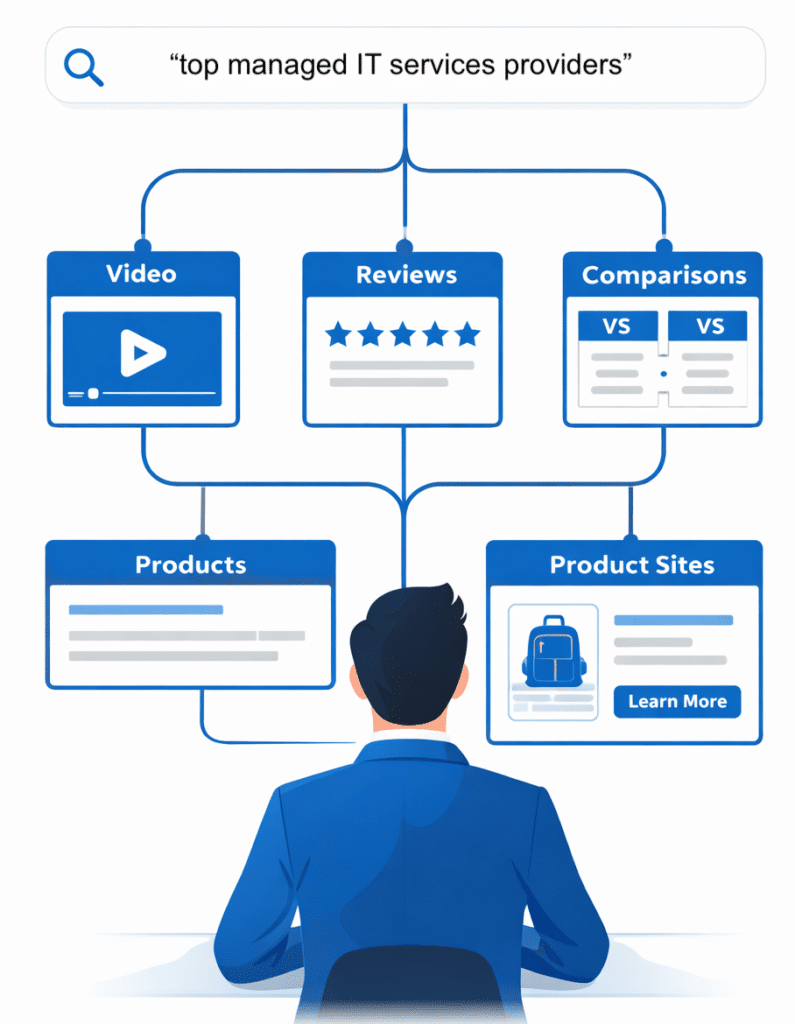
When buyers land on these pages, they rarely interact with a single listing and move on. Instead, they absorb signals from multiple parts of the results page: the ad placements, the organic rankings, the videos, the review platforms, and increasingly the AI-generated summaries at the top.
That behavior creates an interesting dynamic. If your brand appears only once on the page, you have a chance to earn attention. But if your brand appears five or six times across different features, you shape the buyer’s perception of the entire category.
Repeated exposure creates a powerful effect. Buyers begin to assume that the brand they keep seeing must be an established player, even if they haven’t interacted with it before. It feels credible, visible, and widely recognized.
That perception can be decisive in B2B markets where trust and familiarity play a significant role in vendor selection.
The Core Components of Omni-SERP Coverage
When I think about Omni-SERP, I’m usually looking for a combination of placements that collectively dominate the results page for a given query.
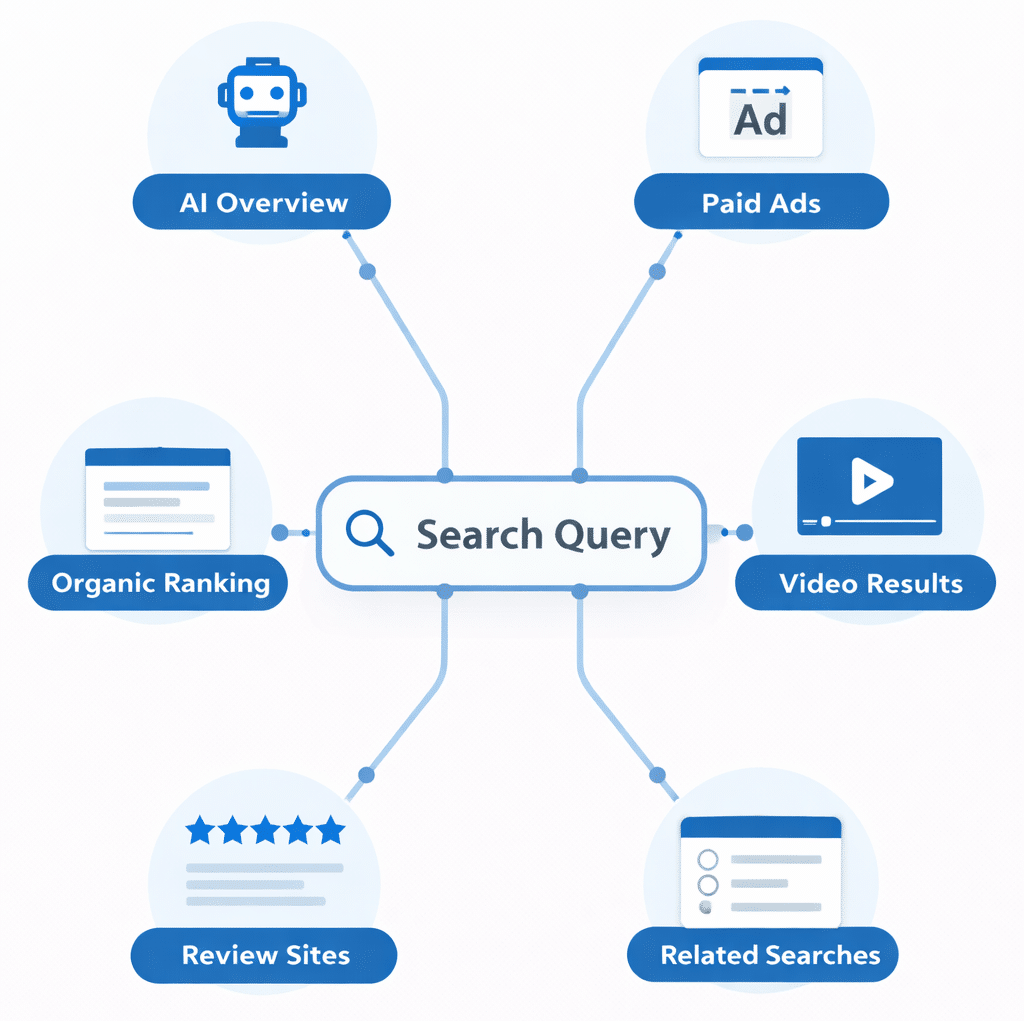
One of the most visible positions today is the AI Overview citation. These summaries appear at the top of many commercial searches and synthesize information from multiple sources to provide quick recommendations or explanations. Being cited within that section means your brand becomes part of the narrative Google is presenting about the category itself. For buyers who scan the AI summary before clicking anything else, that exposure can shape their understanding of the vendor landscape.
Directly below that layer is usually paid search. While many organizations treat paid and organic search as separate channels, they function very differently when viewed through the Omni-SERP lens. The top ad position provides guaranteed above-the-fold visibility, which ensures that your brand is seen even before organic results come into play. When the same company appears both in the top ad position and the top organic result, it sends a subtle but powerful signal of authority. It suggests scale and credibility, regardless of whether the user consciously registers the duplication.
Another placement that’s becoming increasingly important is the video carousel, particularly YouTube results. Many commercial queries now surface video explainers, comparisons, or product walkthroughs before traditional organic links. If a company has invested in content that addresses the exact query a buyer is searching—such as “best CRM for startups” or “top marketing automation tools”—it can occupy this visual space and capture attention from users who prefer video over written content.
Of course, the traditional #1 organic ranking still plays a central role. In many cases, this is where the most detailed information lives and where buyers ultimately land to evaluate the solution more deeply. The key difference in an Omni-SERP approach is that the organic page isn’t operating alone. Instead, it sits at the center of a broader ecosystem of visibility.
Third-party websites also contribute significantly to the overall picture. Review sites, software directories, and comparison blogs frequently rank for “best vendor” searches. Platforms such as G2, Capterra, and other industry-specific directories act as independent validators in the buying process. When a brand appears prominently on those platforms at the same time it appears in ads, organic results, and videos, the effect is cumulative. Each placement reinforces the credibility of the others.
Finally, there are the smaller but still influential SERP features. Modules like People Also Search For, related products, or additional recommendation panels. Individually, these features may not drive large volumes of traffic or visibility. But collectively, they increase the number of times a buyer encounters the same brand while exploring the results page.
The common thread across all of these placements is repetition. Buyers repeatedly encounter the same company name across different contexts, which builds familiarity and trust.
Why Even Partial Coverage Is Powerful
Achieving complete Omni-SERP coverage for a competitive B2B query is difficult. It often requires strong domain authority, an active paid search program, well-optimized video content, and a meaningful presence across third-party platforms. Most companies will not control every possible position.
The good news is that perfect coverage isn’t necessary.
Even partial Omni-SERP visibility can dramatically outperform traditional SEO strategies. Consider a scenario where a company controls the #1 organic ranking, holds a top ad position, and has a video ranking in the carousel. That company already appears in three of the most prominent visual areas on the page.
A competitor might technically rank in the top five, but if they appear only once while another brand appears multiple times, the difference in perceived authority can be substantial.
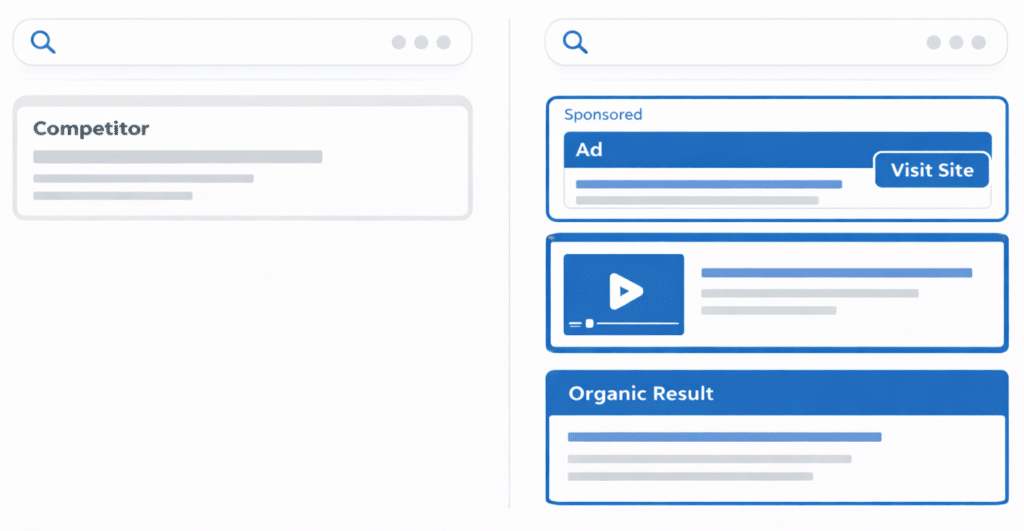
In practice, this often leads to a disproportionate share of clicks and brand recall going to the company with broader coverage. Buyers remember the brand they saw repeatedly, not the one that appeared once among several options.
From a pipeline perspective, this concentration of attention can translate directly into more demo requests, more sales conversations, and more qualified inbound leads.
Omni-SERP Is the Result of Multiple Systems Working Together
One of the reasons I find the Omni-SERP framework useful is that it highlights an important reality about modern search: no single tactic produces this outcome.
Dominant SERP coverage usually emerges when several different marketing capabilities are working together.
Technical SEO ensures that your site is crawlable, fast, and structurally optimized for search engines. Strong content establishes topical authority and gives Google clear signals about your expertise within a category. Paid search provides guaranteed visibility for competitive queries where organic rankings alone may take time to achieve.
At the same time, platforms like YouTube create additional entry points into the search results, while third-party directories and review sites add independent validation.
When these elements operate in isolation, their impact can feel incremental. When they align around the same commercial queries, however, they begin reinforcing each other. The result is a level of search visibility that no single channel could achieve on its own.
This is often the point where SEO and GEO stop being viewed as “traffic channels” and start being recognized as pipeline engines.
The Shift B2B Marketers Need to Make for Revenue-Generating SEO/GEO Pipeline
Many B2B SEO programs historically focused on informational content—articles designed to capture early-stage research queries. While that type of content still plays an important role in building topical authority, it rarely produces immediate revenue outcomes on its own.
Omni-SERP shifts the focus toward evaluation-stage queries, where buyers are actively comparing solutions. These moments represent some of the highest commercial intent in the entire search ecosystem.
For marketing teams, the strategic shift involves identifying the queries that define their category and then asking a different question than they might have asked in the past.
Instead of asking, “How do we rank for this keyword?” the more useful question becomes:
“How many parts of the results page can we realistically control?”
That perspective naturally expands the scope of the strategy. It encourages teams to think of paid search, video, third-party platforms, and organic content as interconnected parts of a single system.
And when those pieces align around the right queries, the outcome becomes visible not just in rankings dashboards but in something far more meaningful: revenue-generating pipeline.
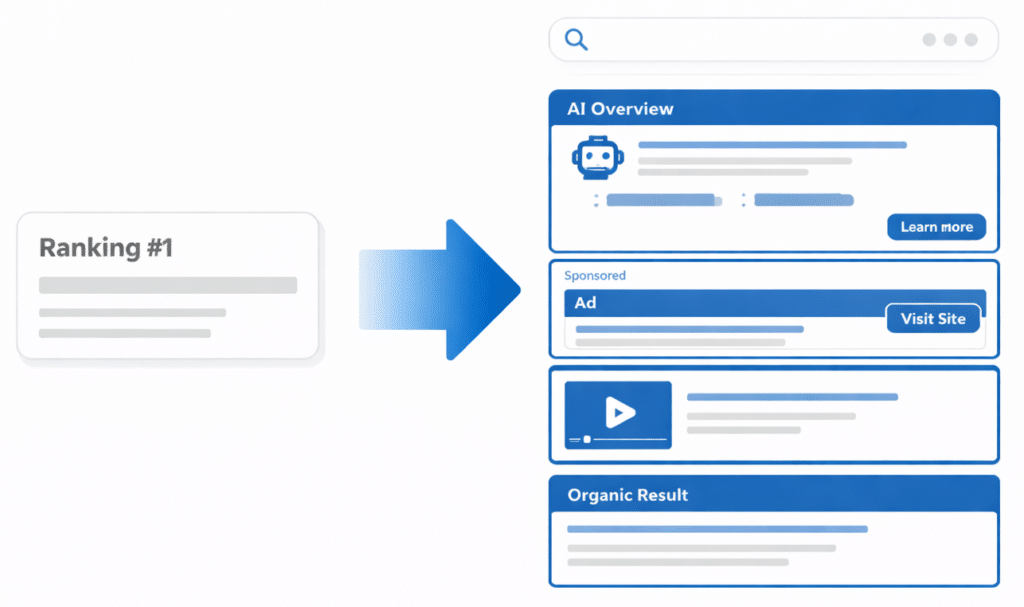
Ultimately, the future of B2B search isn’t about securing a single position on the results page. It’s about owning as much of that page as possible for the moments that matter most. That’s the core objective behind Omni-SERP.
About the Author

Share this Post